



Multi-chain is no longer a roadmap item, but the reality teams are building for.
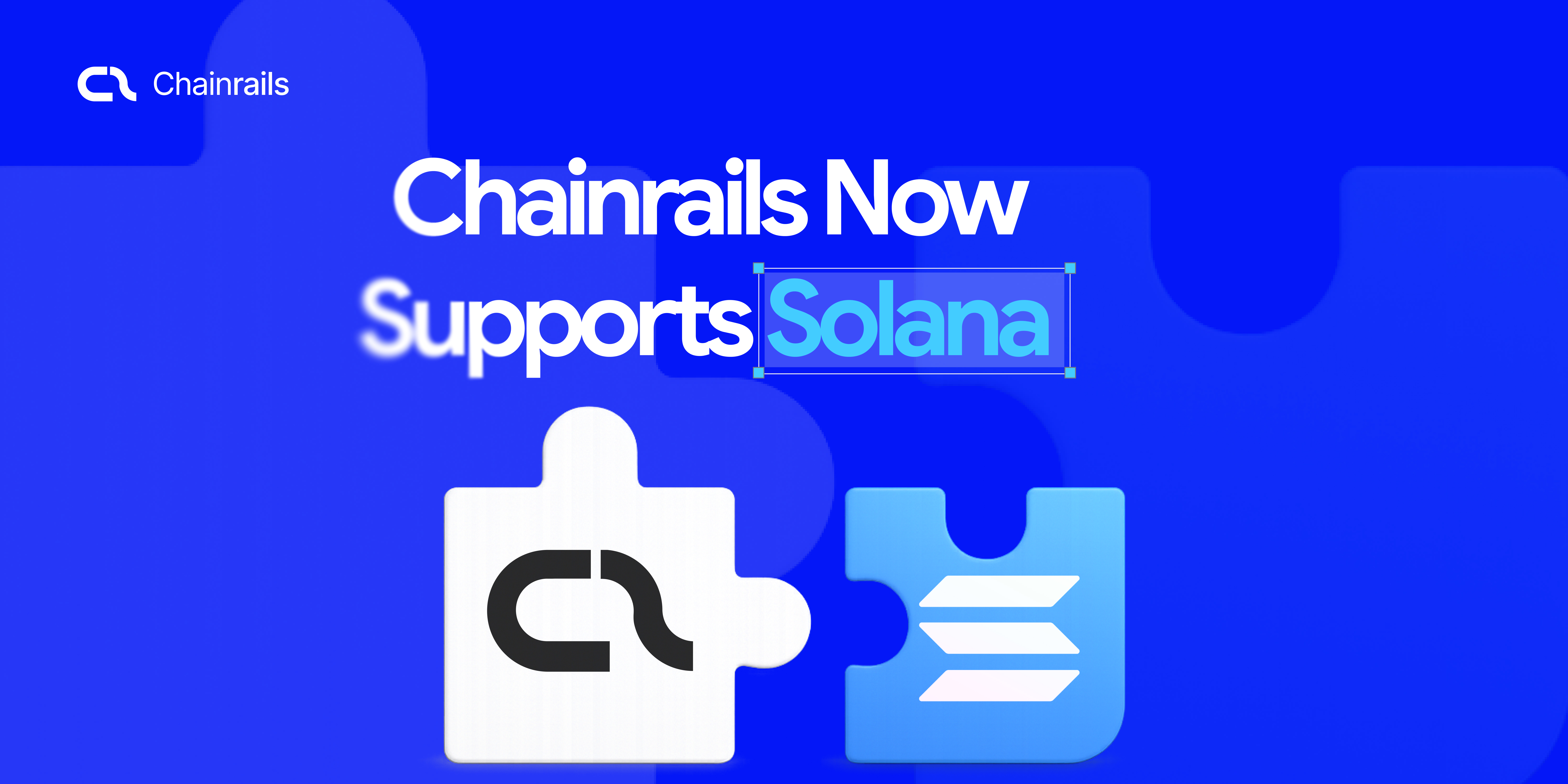
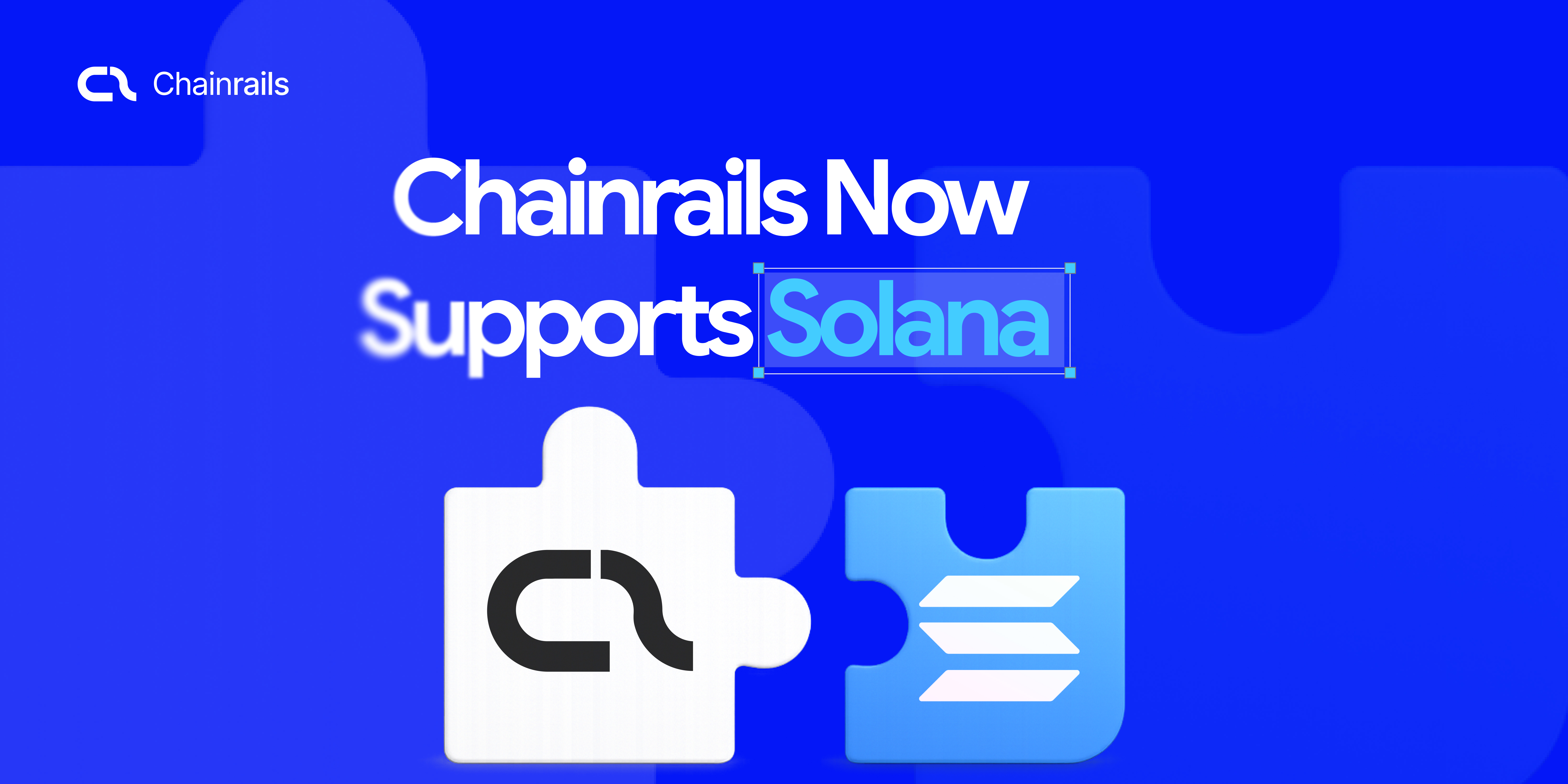
On the 27th of April, Chainrails announced support for Solana – expanding its coverage to 12+ chains and bringing one of the most active ecosystems in Web3 into a single integration.
For teams building payment flows, solana isn’t just another chain added to a list. It means access to a large, highly active user base, without rebuilding your payment infrastructure.
Your Users Are on Solana
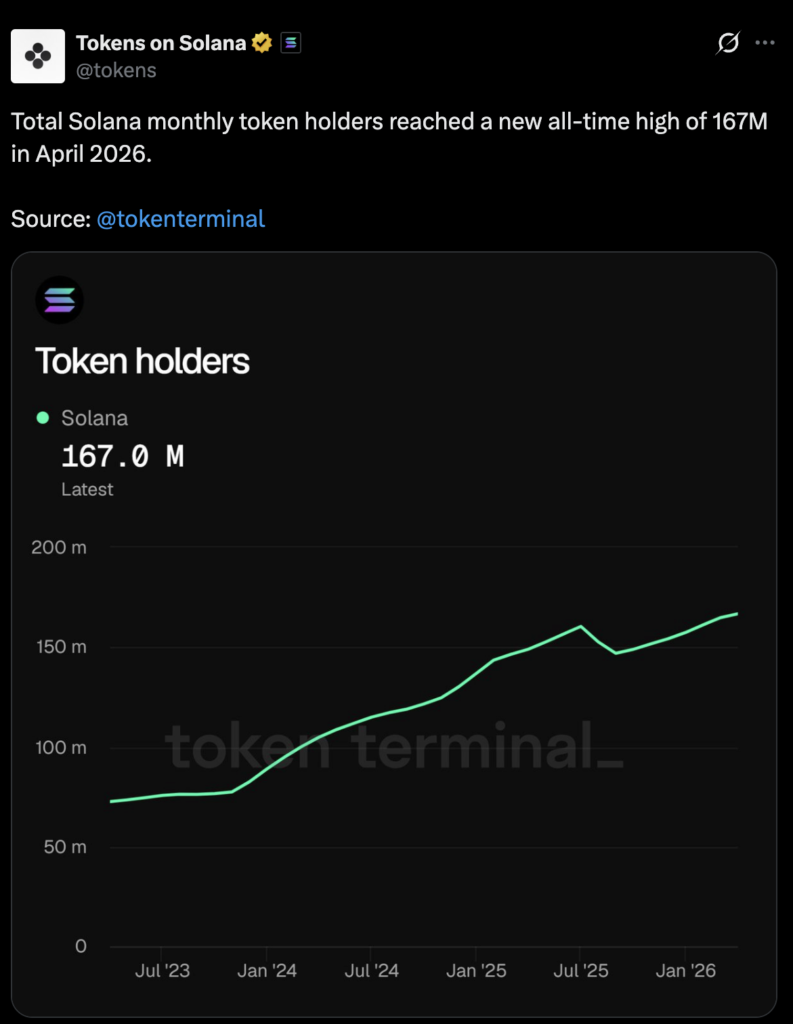
Solana has evolved into one of the most active ecosystems in Web3, processing over 10 billion transactions in Q1 2026, and reaching an all-time high of more than 167 million monthly token holders in April 2026, with over 2.2 million daily active wallets.
According to Superteam Nigeria’s Q1 2026 Impact Report, Nigeria now ranks #1 in Africa and #6 globally by Solana developer share, with Nigerian builders accounting for 67% of Africa’s active Solana developers.
The report also highlights growing economic activity within the local ecosystem, with over $162,000 distributed through grants and bounties in Q1 alone, alongside increasing adoption of Solana-based payment, settlement, and financial products across the region.
The implication is clear: the market is already on Solana, and increasingly, your users are too.
For many users today, a Solana wallet is no longer some niche infrastructure. It’s becoming a default way to transact, trade, save, and move value on-chain.
What This Means for You
With Solana now supported, Chainrails extends its abstraction layer to cover one of the highest-activity ecosystems in Web3.
This means you can:
- Receive funds from other chains, settled directly into Solana in your preferred settlement assets regardless of source chain. Chain abstraction handles conversion and routing.
- Expand payment surface area without additional integration overhead. No new rails, no custom handling.
Everything runs through a single integration layer
Establishing a Multi-Chain Reality
Chainrails was built on a simple principle: payment intent should be fulfilled regardless of origin.. As long as value exists somewhere, businesses should be able to receive it without rebuilding infrastructure for every network.
Adding Solana expands that coverage layer, allowing incoming payments from a high-activity ecosystem to settle directly into your existing flow without any additional integration work or changes to your backend.
At the same time, builders on Solana can now access liquidity across the multi-chain ecosystem without leaving Solana.
Abstracting the complexity that exists at the infrastructure layer ensures teams can focus on settlement outcomes rather than integration overhead.
Getting Started with Chainrails
Getting all the benefits Chainrails has to offer is as easy as completing these four steps
- Sign up and access your dashboard to create your Chainrails workspace.
- Integrate the Chainrails SDK into your backend. This is the only connection required to enable multi-chain payment support without building separate payment rails.
- Configure your settlement preferences by defining the assets you want to receive funds in, regardless of the payment source.
- Once set up, go live. You can now accept payments across multiple networks, including Solana, without additional integration work.
What’s Next
Solana support is just one step toward a broader goal; making payments chain-agnostic by default.
We’re continuing to expand ecosystem coverage, improve routing and settlement, and reduce the operational burden of handling value across chains.
More chains. Better flows. Less friction.
Solana is now live on Chainrails.